


















On Thursday, Dec. 11, students gathered in CSI 124 for an interactive discussion on managing stress as a college student. Hosted by Professor Claffey of the Psychology Department, the event offered a relaxed environment where students could learn about stress while openly sharing their experiences.
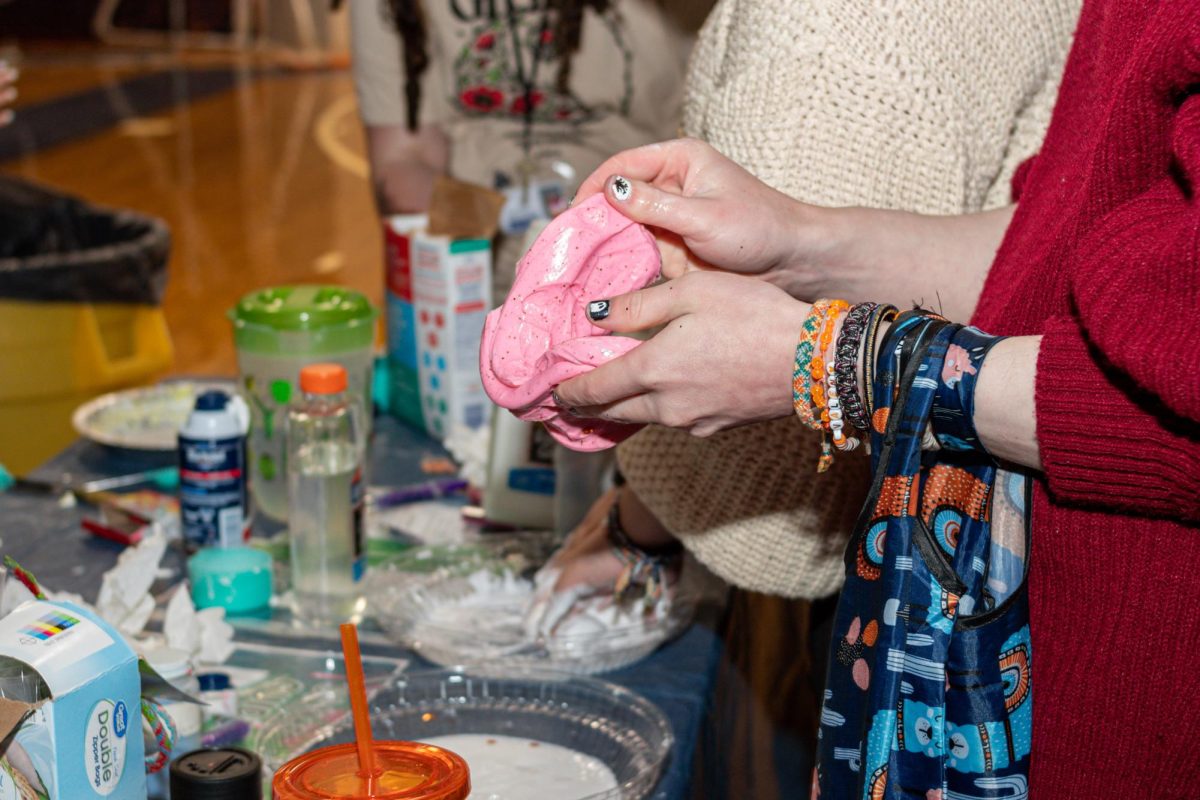
The session, organized by members of the Psychology Club, included pizza, soda, and coloring pages to help create a calm and welcoming atmosphere. The informal setting encouraged participation, especially as students prepared for finals.
Professor Claffey opened the discussion by addressing common sources of student stress. She explained that academic pressures such as exams, deadlines, and final projects often peak at the end of the semester. However, she emphasized that stress extends beyond academics.
“Stress doesn’t just come from school,” Claffey said. “Relationships, family issues, work schedules, and health concerns all add layers of pressure, especially during finals.”
Claffey explained that she was invited by the Psychology Club to lead the session at a particularly fitting time.
“The students who are members of the Psychology Club asked me to do a presentation, and I said, ‘Cool—what’s the topic?’ They wanted to talk about stress,” she said. “It’s the perfect time of year with finals, so I put together this presentation.”
To help students understand stress more clearly, Claffey presented a slideshow defining stress as “the process whereby an individual responds to events they appraise as overwhelming or threatening to their well-being.” She emphasized that personal perception plays a major role in whether a situation becomes stressful.
Using the example of a disagreement with a close friend, Claffey explained that one person might feel anxious about the future of the relationship, while another may feel less distressed if they believe the relationship will recover. The example illustrated how individual experiences and beliefs shape emotional responses.
Claffey also introduced the Perceived Stress Scale, developed by psychologist Sheldon Cohen in 1983. She explained that the scale helps individuals assess their overall stress levels rather than stress tied to a single event. Students were encouraged to use the tool to reflect on how they have been coping recently.
The discussion then turned to different types of stressors, including everyday challenges such as deadlines and exams, as well as major life events like illness, loss, marriage, or divorce. Claffey referenced the DSM-5 definition of traumatic events to explain how certain experiences can trigger more severe stress responses.
She also described how the body reacts to stress, outlining the general adaptation syndrome, which includes the stages of alarm reaction, resistance, and exhaustion. Claffey noted that repeated activation of the stress response can make recovery more difficult and contribute to long-term health issues.
“Stress is scary,” she said, before shifting the conversation toward coping strategies.
Claffey introduced techniques for activating the parasympathetic nervous system—the body’s “rest and digest” response—which helps counteract fight-or-flight reactions. Suggested strategies included drinking warm beverages, slow breathing, stretching, mindfulness, and meditation.
Students shared their own coping methods, such as fidgeting with small objects, reading, and using grounding techniques like the 5-4-3-2-1 method, which encourages awareness of the present moment.
Claffey highlighted the importance of informal learning environments and faculty-student interaction.
“I think it’s so important to have these events because it gives students the opportunity to interact with faculty outside of the classroom,” she said. “They’re still learning, but not in a situation where they feel like they’re being graded.”
She also encouraged students experiencing stress to seek support.
“For students struggling with finals, now is a good time to talk to your professors,” Claffey said. “Your professors are a resource. I love when students come to office hours—if they’re struggling without me, it would make my heart hurt.”
Overall, the event provided students with practical tools, shared experiences, and a deeper understanding of how stress affects both mind and body. Through open discussion and expert guidance, attendees left better equipped to manage stress during finals and beyond.