



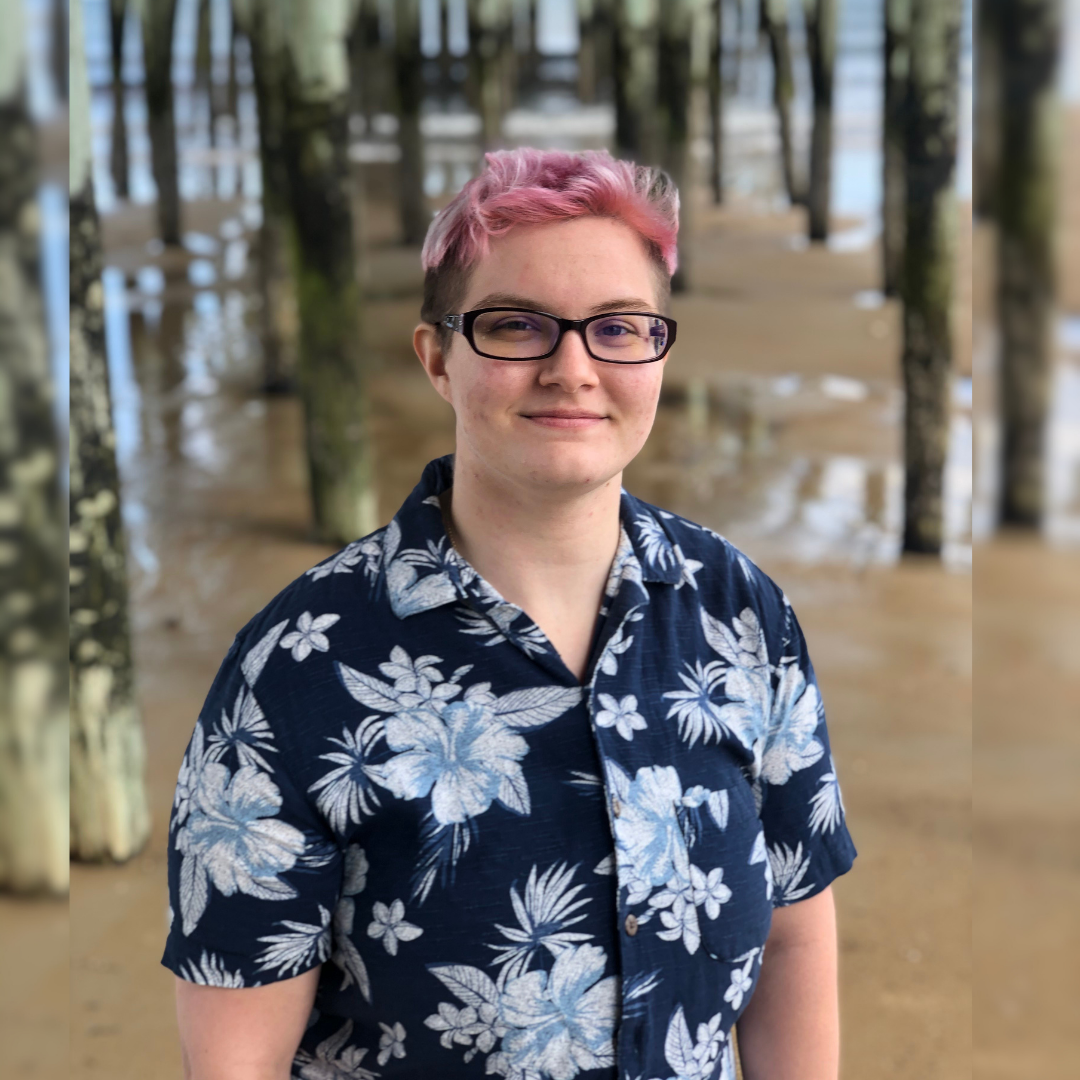




Before delivering her keynote address, Ginsberg sat down with Assistant Professor Müge Karabağ for an in-depth conversation on press freedom, the challenges journalists face worldwide, and the evolving landscape of modern journalism.
Q: Hi Jodie, welcome to MCLA and thank you for taking the time to speak with us today. It’s a pleasure to have you on campus as part of the Hardman Lecture Series. I’d like to start with what brings you here and what made you want to participate in this year’s program?
A: I’m here to give this year’s Hardman Lecture, and I wanted to participate because I think this moment in time is really critical for journalism. As someone who spends every day defending journalists and defending press freedom, I believe it’s very important to explain why that matters — especially as we are seeing more and more journalists under threat worldwide. It is the most dangerous time in the world to be a journalist, and yet support for journalism remains persistently low. Trust in journalism remains persistently low. So I think those of us who have as their career — as their raison d’être¹ — the defense of journalists, have a responsibility to explain to a broad audience why journalism matters and why it needs defending.
Q: For students who may not be familiar with your work, how would you describe what CPJ does and why its mission matters?
A: The Committee to Protect Journalists is a press freedom and journalist-protection organization. We do exactly what it says on the tin. We document threats to journalists globally — threats to their lives, threats to their well-being — and we provide assistance to journalists. Some of that is direct emergency financial assistance for journalists in imminent danger or at risk because of their work. That can include prison support, legal support if you’ve been accused of wrongdoing, or help relocating into exile — something many more journalists are being forced to do today. We also do advocacy on behalf of journalists at risk, persecuted journalists, and in support of global press freedom. Currently, we are seeing record numbers of journalists jailed worldwide, partly because of increasing declines in democracy. One case people may know is Wall Street Journal reporter Evan Gershkovich, who was detained by Russia, accused of being a spy, and wrongfully held. He was eventually freed in a prisoner swap. We worked actively to keep his case in the public eye. One thing that’s very important to understand is how journalism can be immensely valuable to a person’s sense of well-being — to their determination to keep going. And we know that from the hundreds of journalists we have supported in recent years.
Q: When did you first become interested in journalism, and what led you to a career focused on press freedom and protecting journalists?
A: I’ve wanted to be a journalist ever since I was very, very small. My parents will tell you I used to run around with a pencil reporting on everything. I used to force my friends to “play the news” when I was little. What made me want to be a journalist was my belief that we can only tackle injustice if we know that injustice exists. Reporting stories — revealing information others would rather conceal — felt essential to me. And it turns out that not only did I believe journalism was important and became a journalist as a result, but I also wanted to defend others who do that work in some of the most dangerous places in the world.
Q: In countries experiencing authoritarian shifts or democratic backsliding, what role does independent journalism play?
A: Independent journalism is vital in countries where democracy is eroding. Journalists are often the first — if not the first — people to be targeted when countries begin shifting toward autocracy. It makes sense: if you want to control the people, you must control the narrative. To control the narrative, you have to control information — which means targeting independent journalists. This is why we regularly see autocratic regimes harass, arrest, or legally punish journalists; take over independent outlets; push reporters into exile; and, in some cases, kill journalists. But independent reporting is essential — it’s how the public learns what those in power are doing.
Q: How do you see the relationship between journalism and AI evolving in the coming years?
A: Like all technologies, AI has both good and bad. AI can help journalists analyze large datasets — something increasingly difficult as the financial model for journalism weakens and fewer people are doing deep investigative work. But AI also poses risks. It can generate incorrect information, and it can do so without the oversight of a properly trained journalist who knows how to verify and present facts. So there is tremendous opportunity — but also significant risk.
Q: My graduate research focused on war correspondence during the Syrian civil war. Many journalists described the emotional challenges of reporting in conflict zones. From your perspective, is complete objectivity possible in such environments?
A: It’s one of my favorite questions. I’ll quote one of my heroes — Christiane Amanpour of CNN. She has repeatedly said that our job as journalists is not to be neutral; it’s to be truthful. We do not have to be neutral in the face of injustice. We must be truthful. We must report facts accurately. But that does not require neutrality. In recent years, many journalists have mistaken fairness and objectivity for neutrality, as though we must always create “balance,” even when none exists. Think of climate coverage: 99 scientists on one side and one skeptic on the other — simply for “balance.” That’s false equivalence. So no, you do not have to be neutral. But you do have to be truthful.
Q: What essential skills or advice would you emphasize for young journalists entering the profession today?
A: I would advise anyone who wants to be a journalist to do it. We need more journalists than ever. Two things are essential: curiosity and confidence. You must be curious — always asking why, and refusing to stop asking. And you must have the confidence not to accept excuses or be pushed aside. Journalism cannot be done from an armchair. It requires going out into the world and reporting the facts yourself. My job is not to ask people whether they think it’s raining — it’s to go outside and check. I didn’t study journalism; I studied English literature. People come to journalism from all kinds of backgrounds — history, law, economics. What matters is a deep interest in how the world works, and a desire to clearly explain it to others. A liberal arts degree is a wonderful foundation for journalism. And I would encourage everyone to give journalism a try — it’s a great profession.
Footnote
¹raison d’être: A French expression meaning “core purpose” or “reason for existence.”