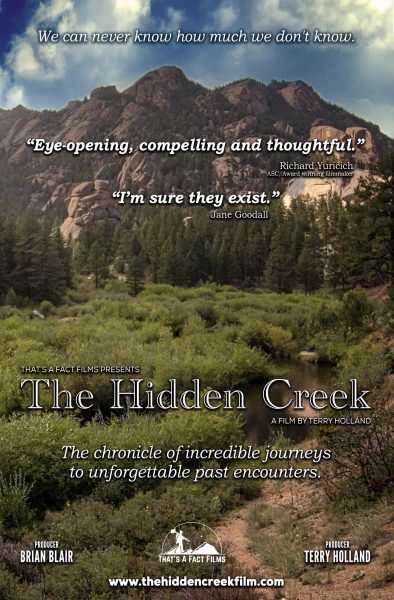





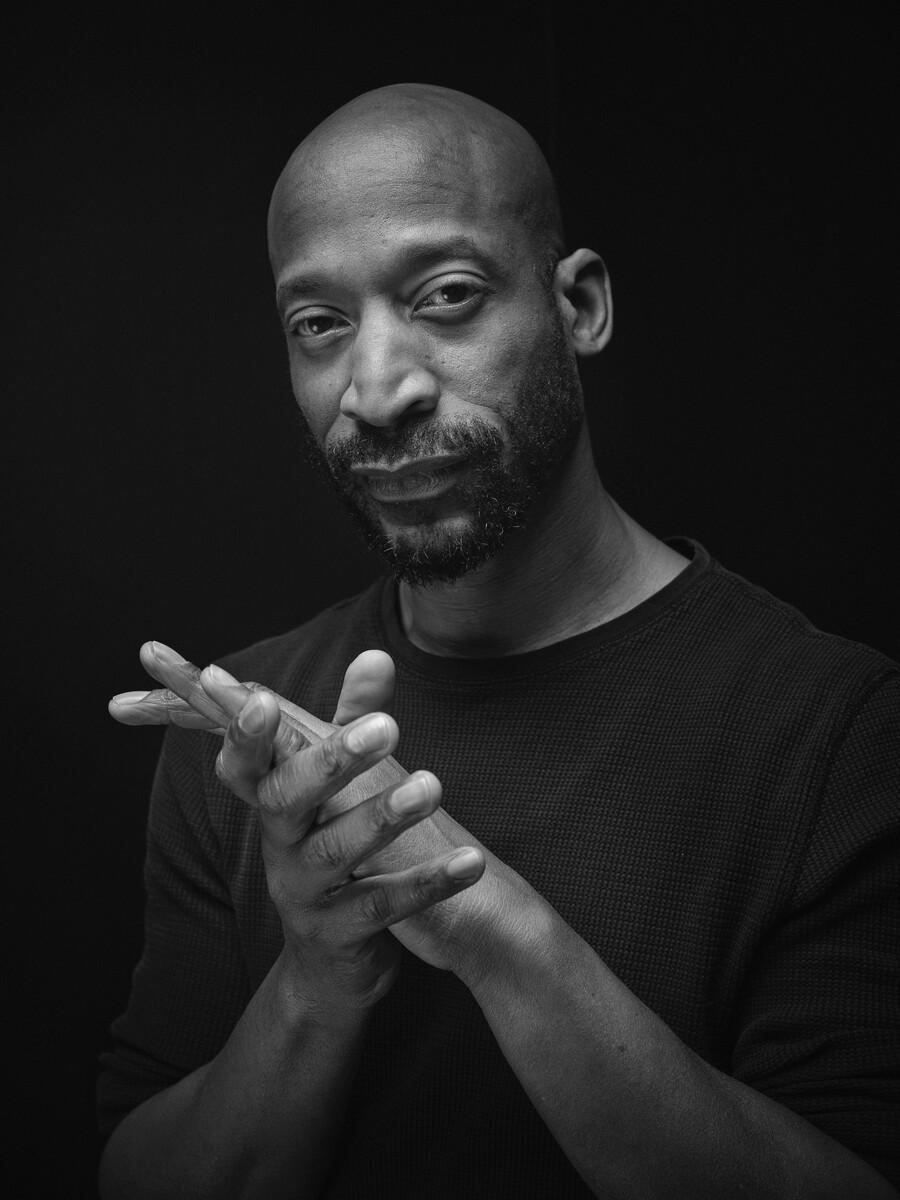







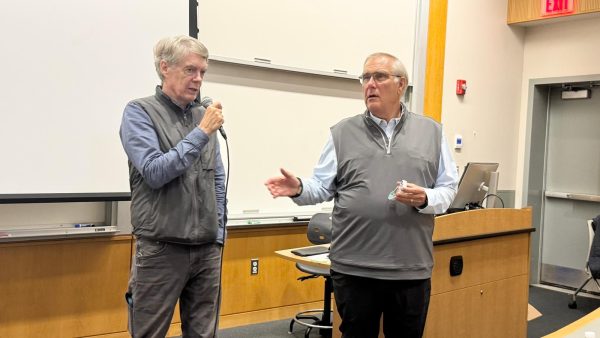
On Friday, October 3, the Massachusetts College of Liberal Arts (MCLA) hosted a special screening and discussion of the unreleased Bigfoot documentary Hidden Creek in the Center for Science and Innovation (CSI). The event featured Terry Holland, the film’s director and producer, and Brian Blair, co-producer and cast member. Both joined the audience to discuss their creative process and share behind-the-scenes insights about the making of the documentary.
Exploring the Mystery
Directed by professional filmmaker Terry Holland, Hidden Creek explores one man’s alleged encounter with Bigfoot in the 1970s and follows a team of friends, researchers, and the original witness as they retrace his steps in the Colorado wilderness to investigate whether the creature truly exists.
Holland, whose credits include work on the 2022 feature film Bodies, Bodies, Bodies, described the project as a labor of love driven by curiosity and skepticism in equal measure.
“Editing it into a smooth story was part of the fun challenge of it,” Holland said.
He explained that screening the film across different geographic regions—such as a recent showing in Tennessee—helped the team gather feedback on audience interest by age and location.
Philosophy of a Documentary Filmmaker
Holland spoke candidly about the ethics of documentary filmmaking, emphasizing honesty and restraint.
“Do the service of being a documentarian,” he said. “Don’t be there to evangelize and preach about it.”
His goal, he explained, was to present the material in a way that respects both skeptics and believers—allowing audiences to form their own conclusions rather than pushing a single narrative.
During the audience Q&A, questions ranged from technical aspects to existential meaning. Holland noted that 4K resolution has become standard for high-quality documentary production and reflected on the challenge of balancing cinematic beauty with raw authenticity.
Community Engagement and Reflection
An earlier advanced screening of Hidden Creek was held at the Dalton Free Public Library in May 2025, where attendees were invited to provide feedback. That version—billed as the “director’s cut”—ran approximately 2 hours and 20 minutes.
According to the film’s official website, Hidden Creek follows a man’s life-altering 1972 encounter with Bigfoot and his decades-later return to the site, accompanied by family, friends, and a film crew, to reexamine similar reports and weave a broader narrative around the Sasquatch phenomenon.
At the MCLA screening, Holland and Blair encouraged critical engagement rather than blind acceptance, inviting viewers to question the evidence and consider the role of belief in storytelling. Audience reactions ranged from skepticism to fascination, sparking conversations about cryptid folklore and the challenges of visual documentation in wilderness settings.
“Footage alone may not persuade,” Holland said, “but meaningful storytelling and transparency can move audiences closer to understanding.”
Blending Curiosity and Craft
While Hidden Creek remains unreleased, Holland and Blair’s careful approach and regional screening strategy suggest a measured rollout, aimed at refining the film and gauging public interest before formal distribution.
The MCLA event drew documentary enthusiasts, cryptid believers, and curious locals, blending academic curiosity, folklore, and filmmaking craft in one screening.
Events like this reflect MCLA’s growing engagement with independent media and documentary storytelling, offering students and the community a chance to explore how truth and myth converge on screen.